




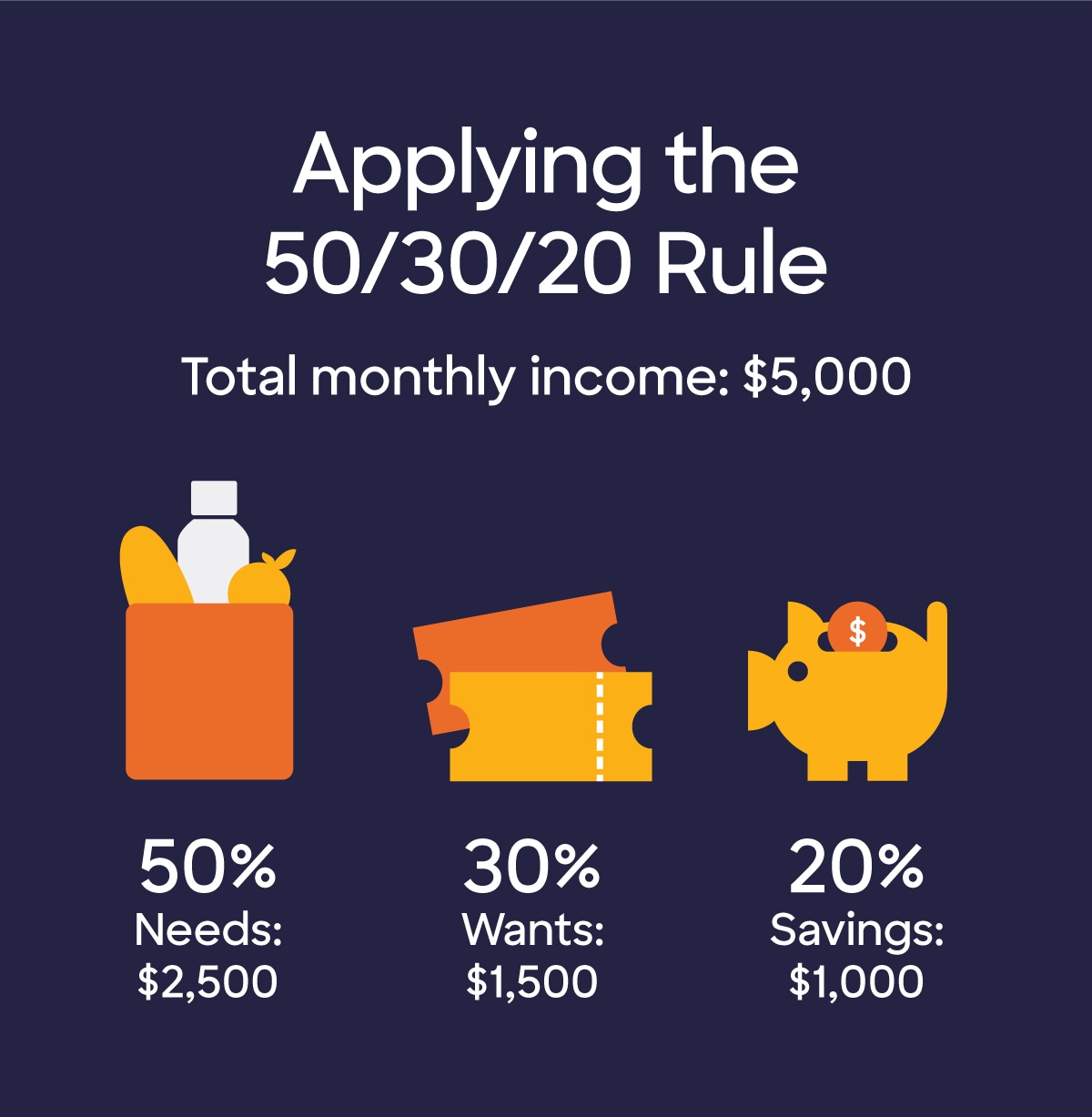
The 50/30/20 budget rule suggests allocating your after-tax income across three broad categories: 50% to needs, 30% to wants, and 20% to savings/debt repayment. Then you can work to align your expenses and spending to hit those targets consistently. It's a straightforward budget approach designed to help you define and work toward your financial goals.
If you’re new to or hesitant about the idea of making a personal budget, the 50/30/20 rule may offer a straightforward approach to get you started. Budgeting forces us all to look at the relationship between our spending and income. The 50/30/20 budget approach has been around for a while but first earned widespread attention with the 2006 publication of All Your Worth: The Ultimate Lifetime Money Plan, written by Senator Elizabeth Warren, a former professor, and her daughter, Amelia Warren Tyagi.
Following this rule helps answer the question “How much of my paycheck should I save?” and might give you a solid strategy to build long-term savings. And if high-interest debt is blocking your financial goals, a personal loan to consolidate debt might help you get back on the right track.
Table of contents
- What is the 50/30/20 rule?
- Budget 50% for basic needs
- Budget 30% for wants
- Budget 20% for savings and debt repayment
- Try out the 50/30/20 rule for yourself
What is the 50/30/20 rule?
Although it’s commonly referred to as a rule, 50/30/20 is really just a guideline. It suggests that if you can balance your expenses and other spending to stay within 80% of your after-tax income and dedicate the remaining 20% to savings and debt repayment, you’ll be on a sustainable path to financial security.
Keep in mind that the 50/30/20 rule may not work for everyone, no matter how hard you work to limit your spending. If you live in an area that has seen a disproportionate increase in housing costs, for example, you might have to tweak the ratio.
Let's face it, a budget only works if you stick to it. And for you to stick to it, the budget must be realistic. The 50/30/20 budget rule may help you create financial goals that are within your power to achieve.
Budget 50% for basic needs
Your most basic needs are food, clothing, and housing, including utilities. This category will typically include any other nonnegotiable regular expenses for things like childcare, transportation, minimum debt payments, and any other basic requirements of daily life.
Here’s a more detailed list of some of the expenses that often fall into the “basic needs” section of a budget:
- Housing, including rent or mortgage payments and insurance
- Childcare
- Transportation costs, including car insurance, operating expenses, and costs for job-related parking—or public transit passes
- Household utility bills, cell phone, and internet service
- Medical expenses, including insurance premiums, co-pays, and prescription medications
- Minimum payments on credit card debt or other loans
If the total cost of these essential living expenses consistently creeps above 50% of after-tax income, it could be more difficult to pay off your debt and/or reach important savings goals.
Also, if you carry any debt with a variable rate, it may become more expensive to make even minimum payments if interest rates rise.
Budget 30% for wants
You'll always have things you want to spend money on that go beyond basic life necessities. These include discretionary items like dining out, recreation, vacations, entertainment, and gifts. To make sure you stay on track, budget 30% of your after-tax dollars for nonessential spending. That way, you can enjoy a splurge or two without cutting into funds allocated to savings.
For most people, allowing 30% of after-tax income for discretionary expenses is a sustainable target for this category. The good news? If you can’t quite cover your basic living expenses with 50% of after-tax income, you can set a lower target for spending on wants and still have room for a little fun.
Budget 20% for savings and debt repayment
This could be your game-changing 20%. The most successful savers treat their savings plan as a non-negotiable budget item. That way, they should have an adequate emergency fund and are consistently contributing to long-term savings for retirement or other important goals.
You can use several different tools to save regularly. In case of an emergency, you may need easy access to funds, so some portion of this 20% should go into a regular savings account, a money market account, CD with no penalty, or interest checking account separate from one used for bill paying.
For long-term savings goals, think about maxing out your 401(k) plan through your job if you have one. 401(k) savings are automated, tax-deferred, and often matched by your employer. An IRA is also tax-deferred. Plus, the funds go directly to the 401(k), so you don't worry about spending money you've determined to save. Many people pursue additional investment strategies to build a bigger nest egg. Consult an investment advisor for guidance on how you might do that.
Of course, committing to regular savings isn’t always easy. If your living expenses or your higher-interest debt prevent you from reaching a 20% savings goal, you may need to tweak some things. First look to see if there are ways you can reduce spending; you could find easy solutions, like eating out less or getting rid of subscriptions you don't use.
If you have debt, especially high-interest or variable-rate debt, you might want to look into how you can pay it off more quickly. The sooner you can consolidate, reduce, and ultimately eliminate most forms of higher-interest debt, the better your financial picture may look. Just like there are many approaches to budgeting, there are different strategies to pay down debt. Choose one that works for you, like the snowball debt strategy, which helps you pay off your smaller debts first and helps you see progress quickly.
Dedicating a share of your 20% savings to make additional debt payments on higher-interest credit card accounts, student loans, or other debt, can also count as saving because you’ll reduce the amount of interest you’ll pay over time. And what you save in interest you can put into your savings account.
Try out the 50/30/20 rule for yourself
If you want to assess whether the 50/30/20 budget rule might be a useful strategy for you, simply get out a pencil (or open a spreadsheet) and itemize your expenses in the appropriate category.
“The first step in the budgeting process is to write down what you earn and what you owe,” says Dan Nickele, vice president, Discover Personal Loans. “Make a list of your income sources and post-tax earnings. Then write down what you owe for essential spending categories like housing, transportation, childcare, and food.”
This exercise should give you a sense of whether your basic needs amount to about 50% of your after-tax income. If they do, you have a budgeting model that will help ensure long-term savings, while giving you room to buy some things you want now. If they come to more than 50% of your after-tax earnings, you’ll have started the work to figure out where you might change your spending habits.
Looking for other budgeting approaches?
Tags:
The information provided herein is for informational purposes only and is not intended to be construed as professional advice. Nothing contained in this article shall give rise to, or be construed to give rise to, any obligation or liability whatsoever on the part of Discover, a division of Capital One, N.A., (Discover) or its affiliates.