Woman in a yellow sweater focusing on a tablet at a desk.

Protect Yourself from Synthetic Identity Theft

6 min read
Last Updated: January 28, 2026

Table of contents

Key Takeaways

  1. Synthetic identity theft combines real and made-up information that fraudsters use to establish new credit and make purchases.

  2. Synthetic identity theft is becoming increasingly common and may impact both individuals and financial institutions.

  3. You can protect yourself when you guard your personal information, monitor your credit reports, and educate yourself on phishing tactics.

One day, Sarah sees a new account on her credit report. After investigating, Sarah finds that the Social Security number is hers, but the name and address on the account isn’t. This is an example of synthetic identity theft — a financial crime that uses a combination of real and fake information connected to a new identity.


With so much of our personal data online, synthetic identity theft is becoming more common. It’s important in today’s financial landscape to learn what synthetic identity theft is and how to combat and resolve it.

How does synthetic identity theft work?

Synthetic identity theft, or synthetic identity fraud, uses real information about a person along with falsified information to create a completely false identity. Here’s how it typically works, according to information from the U.S. Government Accountability Office (GAO):

  • The identity thief typically gathers bits and pieces of personal sensitive information from various sources. This data can include Social Security numbers, names, addresses, and sometimes even birth dates. With this information they can create a new persona (a new identity) by merging real and made-up details.
  • Once identity thieves create the fake identity, they can establish a credit profile. They do this by opening new financial accounts (such as credit cards or loans) with the synthetic ID.
  • Over time, the ID thief gradually builds up the credit history of the fabricated identity, making it appear more legitimate. They might make small purchases and pay them off promptly. The goal is to secure larger credit limits for the fictitious identity.
  • Once the credit limits are high enough, the thief can go on a shopping spree, buying expensive goods and services without any intention of paying for them. This stage of fraud is known as the ‘bust-out.’ They do this by maxing out the credit lines and disappearing, potentially impacting individuals and financial institutions.

Did you know?

You’re never responsible for unauthorized purchases on your Discover® Card account.1 Find which Discover card is the best fit for you.

What are the signs of synthetic identity theft?

Synthetic identity theft looks different from traditional identity theft. Here are a few signs to watch out for:

Unfamiliar accounts: You may notice new credit cards, loans, or utility accounts appearing on your credit report. These may connect to your personal information, but the accounts themselves are unfamiliar to you.


Inconsistent personal information: Because of the combination of real and fake information, you may see variations of your personal information. Look for small changes in your name, birthdate, or address.


Unexpected mail or communications: You might receive bills, statements, or collection notices for accounts that you didn't open. Also, watch out for calls or emails from creditors or debt collectors about debts that aren't yours.


Errors on your credit report: Synthetic identity theft may involve the creation of fraudulent accounts that show up on your credit report. They may have incorrect information or small discrepancies.


Difficulty obtaining credit: Fraudulent accounts created using your information may impact your credit history or trigger fraud alerts. This could cause a problem when opening new credit accounts.


Suspicious or unfamiliar activity: Look for activity on your bank and credit accounts — such as strange purchases, withdrawals, or changes to account information.


It's important to note that the signs of synthetic identity theft may vary, and these are just a few examples. If you suspect that you may be a victim, it's recommended to contact your financial institution, major credit bureaus, and law enforcement agencies for more help and guidance.

How common is synthetic identity theft?

Synthetic identity theft is a growing concern in today's digital age. According to the Federal Trade Commission (FTC), synthetic identity theft makes up most identity theft cases. An FTC report revealed that synthetic identity theft may make up around 80%–85% of all identity fraud cases.

Additionally, the exact number of instances of synthetic identity theft may be underreported due to lack of public awareness and because of its complex nature. Because synthetic ID theft involves using bits and pieces of information from different sources, it may make tracking difficult.

While there are no exact numbers to pin down how common synthetic identity theft is, this type of fraud may have a significant impact. It’s important to be educated and take preventative measures to help protect your personal information.

How to recognize and prevent synthetic identity fraud

To effectively protect yourself against this type of fraud, it is crucial to be aware of the signs of synthetic fraud and take proactive measures. Here are some key steps to recognize and protect against synthetic identity theft:

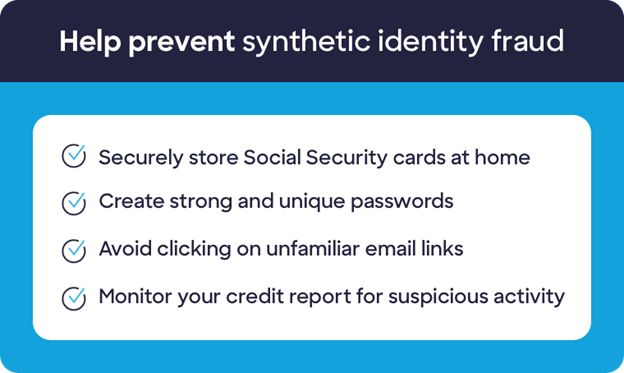
A chart that explains how to help prevent synthetic identity fraud. Tips include the following: securely store Social Security cards at home, create strong and unique passwords, avoid clicking on unfamiliar links, and monitor your credit report for suspicious activity.
  • Guard your personal information. Safeguarding your personal information may help protect you from synthetic identity fraud. You should also be cautious when sharing sensitive details online. Ensure you’re securely storing your Social Security number, birthdate, and financial information.
  • Strengthen passwords and use two-factor authentication. Create strong, unique passwords for all your online accounts. Change them periodically for further protection. Enable two-factor authentication or biometric verification whenever possible to add an extra layer of security.
  • Educate yourself on phishing and social engineering tactics. Thieves often employ phishing emails and social engineering techniques to trick you into revealing personal information. Stay informed about these tactics to protect yourself. Be cautious of suspicious emails, messages, or requests for personal information and avoid clicking on unfamiliar links.
  • Set up a fraud alert. Many credit card companies offer fraud detection alerts to let you know if there’s been suspicious activity with your Social Security number or credit card. Alerts might include a login to your account from an unusual location and unexpected spending patterns.
  • Monitor your credit report. Check for unfamiliar accounts, inquiries, or discrepancies in your personal information. Consider using a credit monitoring service that alerts you to any changes or signs of fraudulent activity.
  • Be cautious of unsolicited credit offers. Fraudsters often use unsolicited credit offers to get your personal information for synthetic ID fraud. Be wary of unexpected emails, phone calls, or mailings offering pre-approved credit. Verify that the sender is a real person—and a reliable person—before sharing any personal details.
  • Use secure networks and devices. When accessing financial or personal accounts, use secure and encrypted networks. Avoid using public Wi-Fi networks or shared devices for sensitive activities. Install reliable security software on your devices to protect against malware or spyware that may compromise your personally identifiable information.

See if you're pre-approved

With no harm to your credit score2

The bottom line

Synthetic identity theft is just one form of financial fraud criminals may commit using data they access from the internet. 


Fraud prevention requires a proactive approach and ongoing vigilance. By following these tips and monitoring your accounts regularly, you can safeguard your personal information and reduce the risk of falling victim to this and other types of fraud.

Next steps

You may also be interested in

Share article

Was this article helpful?

Glad you found this useful. Could you let us know what you found helpful?
Sorry this article didn't help you. Can you give us feedback why?

Was this article helpful?

Thank you for your feedback