




After you cover your basic expenses, like rent, utilities, and groceries, and pay all your bills, like your monthly credit card payment, you’re left with your discretionary income. You may spend, save, and invest your discretionary income “at your discretion,” which means you may use it however you choose. Understanding what discretionary income means and how it works may help you make decisions about spending and saving that improve your financial life.

What is Discretionary Income?
6 min read
Last Updated: February 5, 2026
Table of contents
Key Takeaways
-
Discretionary income is the money you have after taxes and essential living expenses.
-
You may use discretionary income for non-essential spending, like vacations.
-
Managing your discretionary income wisely may help you maintain a strong credit score and healthy finances.
What is the meaning of discretionary income?
Your discretionary income is the portion of your take-home pay that you have left after you subtract income tax and essential living expenses. Ideally, any cost or investment that isn’t mandatory should come out of your discretionary income.
You might use your discretionary funds for costs like a weekend getaway, the latest tech, or investments that might earn money down the road. Choose a credit card that rewards your lifestyle and fuels your future goals.
Separating your monthly discretionary income from the rest of your pay may help you balance your budget and get a sense of your financial stability. When you know how much flexible income you have, you may avoid accidentally cutting into an important part of your budget to purchase something unnecessary.
How is discretionary income different from disposable income?
Some people may confuse discretionary income with disposable income, but they aren’t the same. According to the Bureau of Economic Analysis, your disposable income is the total amount of money you have for all your expenses, investments, and savings after you pay income tax. Discretionary income is the money you have left after you pay for all your necessities. Your discretionary income makes up a portion of your disposable income, but disposable income includes the money you spend on necessities, too.
You might think of discretionary income as “fun” money.

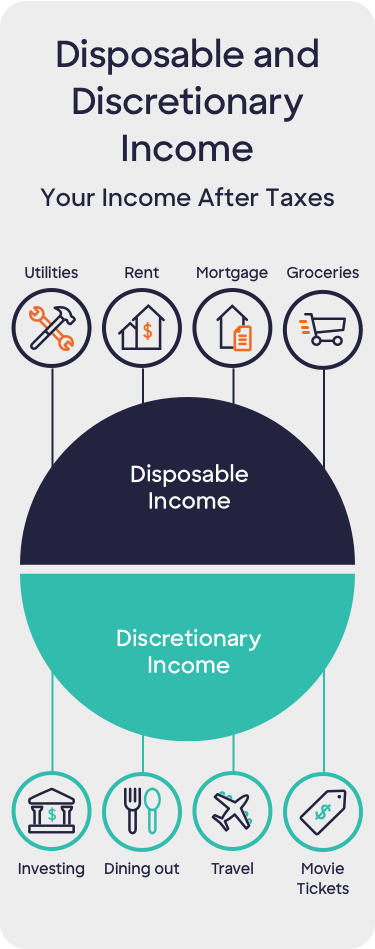
You may use your discretionary income for things like movie tickets or vacations, or put it into savings.
Discretionary vs non-discretionary expenses
When it comes to your finances, two types of expenses play a significant role: discretionary and non-discretionary. Understanding the difference between these two may help you budget for both needs and wants.
Non-discretionary expenses
Non-discretionary expenses include living expenses and debt payments. Your non-discretionary costs are the must-haves in your budget equation, including:
- Taxes
- Housing (rent or mortgage payments)
- Transportation (gas, car payments and maintenance, and public transit)
- Food
- Utilities (electricity, water, gas, internet, phone service)
- Insurance
- Healthcare and medications
- Childcare
- Basic clothing
- Debt payments and other bills
Discretionary expenses
Discretionary expenses include any use of your money that’s not essential to your everyday life. A wide range of purchases and other money moves may be considered discretionary, including:
- Vacations
- Investments
- Retirement accounts
- Savings
- New tech devices
- Streaming services
- Luxury items
- Entertainment, like movies and concerts
Understanding these expense categories helps you make smart financial decisions, whether it's in your personal life or business endeavors.
How to calculate discretionary income
To calculate discretionary income, you'll have to subtract your cost-of-living expenses from your after-tax income.
Let's break it down with an example. Imagine you make $4,000 a month, after taxes.
Maybe your cost-of-living expenses, like rent and groceries, amount to $3,000.
The math is simple: deduct your cost-of-living expenses from your after-tax income. That leaves you with $1,000 a month to use as you choose, whether you decide to open a savings account, book a vacation, or invest in the stock market.
Did you know?
You may take your discretionary income further by using a rewards credit card. With Discover, you earn cash back not points.
Why is discretionary income important?
Determining your discretionary income helps you understand much wiggle room you have in your budget. Plus, knowing how much extra money you have may help you adjust to any major life changes, like a job loss, and ensure that your budget aligns with your financial goals and circumstances.
Discretionary income and saving for the future
While there’s nothing wrong with treating yourself to a movie or a nice dinner, you may not want to spend all your discretionary funds on unnecessary expenses. Instead, consider setting aside some of the money you have left over after paying bills and necessities to prepare for your future.
For example, you might deposit a percentage of your discretionary funds into a high-interest savings account each month. That way, your balance earns interest over time, increasing your savings. Or you may put your extra money toward investments, like stocks or bonds, which may yield earnings that boost your income. Using your discretionary money wisely today may set you up for success down the line.
Discretionary income and credit cards
When you complete a credit card application, credit card issuers may ask for information about your income and housing costs to determine your financial stability. However, you generally don’t have to provide any additional information about your discretionary income.
The extra money you have in your budget each month may not influence your credit card eligibility, but it does play a role in responsible credit card use.
Your credit limit doesn’t increase your discretionary income. Overspending on your credit card may put you in a difficult financial situation: If you don’t have enough money to cover your balance each month, your credit card debt may grow quickly as it accrues interest. So, it’s important to keep your spending well below your discretionary income.
If you're tackling debt, your discretionary income may give you an idea of the extra amount you may afford to pay each month.
The bottom line
Discretionary income may help you build a blueprint for responsible credit card use and master the art of budgeting. After you’ve taken care of all your bills and necessary costs, you may have a little fun with the discretionary funds left over. However, putting some extra cash in your savings and investments may set you up for a strong financial future.
See if you’re Pre-approved before you apply
Next steps

See if you're pre-approved

View all Discover credit cards
See rates, rewards and other info
You may also be interested in
Was this article helpful?
Was this article helpful?