





Woman in a yellow sweater focusing on a tablet at a desk.

Protect Yourself from Synthetic Identity Theft

6 min read
Last Updated: January 28, 2026

Key Takeaways

  1. Synthetic identity theft combines real and made-up information that fraudsters use to establish new credit and make purchases.
  2. Synthetic identity theft is becoming increasingly common and may impact both individuals and financial institutions.
  3. You can protect yourself when you guard your personal information, monitor your credit reports, and educate yourself on phishing tactics.

Did you know?

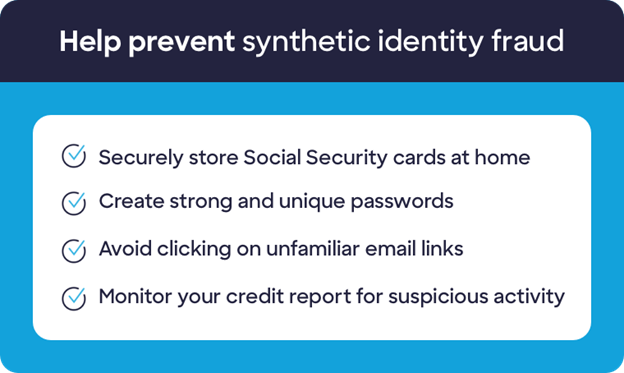
A chart that explains how to help prevent synthetic identity fraud. Tips include the following: securely store Social Security cards at home, create strong and unique passwords, avoid clicking on unfamiliar links, and monitor your credit report for suspicious activity.

See if you're pre-approved

Next steps

You may also be interested in

Share article

Was this article helpful?

Glad you found this useful. Could you let us know what you found helpful?
Sorry this article didn't help you. Can you give us feedback why?

Was this article helpful?

Thank you for your feedback

You are now on a Capital One webpage. Please be sure to review Capital One’s Terms & Conditions and Privacy Notice.